Your Cart is Empty


In this article
A massage gun and a foam roller offer two different ways to apply pressure to muscle. Neither earns a place in your routine simply because it is popular, more powerful or more expensive. Start with what feels manageable, what you want from it and what the evidence can actually support.
The short answer: choose the format, not a recovery promise
Both tools have research suggesting possible short-term benefits for flexibility or how soreness feels. That does not establish one as the best recovery tool for everyone, and feeling better is not the same as repairing an injury or being ready for another hard workout. The studies use different people, devices and routines, so comparing their results is not a head-to-head product test. [1] [2] [3]
A useful tool should fit the routine, not become the routine.
Sleep, food and a manageable training plan come before an optional self-massage device. You do not need to own both. [7]
How the two tools feel different to use
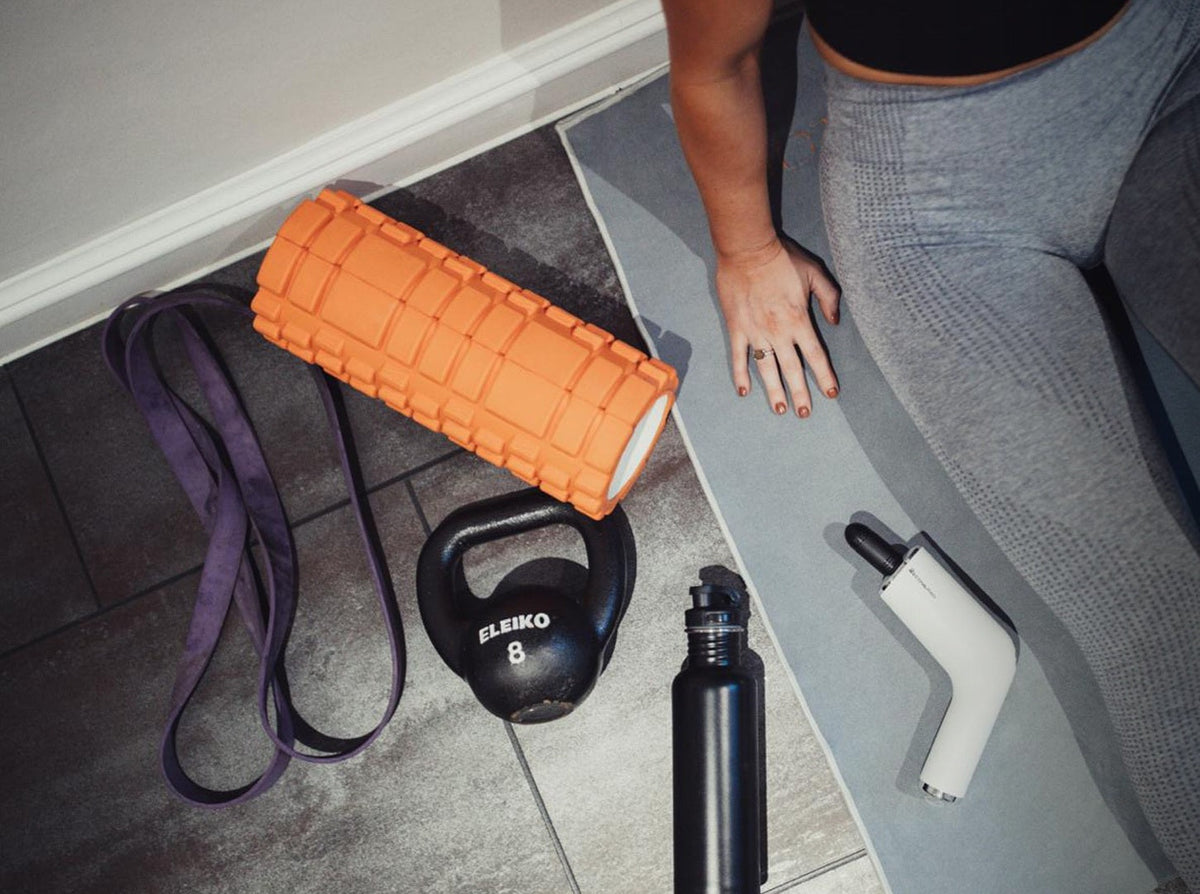
A conventional foam roller: you move part of your body over a cylinder, using body weight to apply pressure. This can involve supporting yourself with your arms or the other leg. A hand-held roller stick is a different format and is also included in some rolling studies. [1]
A massage gun: a motor moves the attachment repeatedly while you hold and guide the device over a suitable muscle. The handling questions are practical: can you hold it comfortably, reach the area without twisting and control the lowest setting? Weight, grip and adjustable settings matter more to that decision than a large number on a specification sheet. [2] [5]
Neither format makes more pressure better. If rolling means awkward bracing, or holding a gun tires your hand, those are reasons to reconsider the setup rather than force your way through it. A tool you cannot use comfortably is not made suitable by a promising research summary.
What foam-rolling research supports
A 2019 meta-analysis combined 21 studies of foam rollers and roller sticks. It found small short-term flexibility benefits before exercise and some reduction in post-exercise muscle-pain perception. Performance effects were generally small, mixed or negligible, depending on the outcome. [1]
The review also identified small samples, varied pressure and timing, and an inability to remove expectation effects. It did not establish a single ideal rolling routine. Its results should not be converted into a guarantee of faster recovery for a particular person. [1]
A newer 2024 review compared stretching or foam rolling with other warm-up activities. Across the included comparisons, it found no clear superiority for range of motion or stiffness, with low-to-moderate certainty of evidence. That is a useful reminder that a roller is optional, not a required ingredient of every warm-up. [4]
What massage-gun research supports
A 2023 review of 11 studies found potential short-term flexibility, range-of-motion and recovery-related benefits, but several performance outcomes did not improve. Ten studies had moderate risk of bias and one had high risk. Another review of 13 studies reported possible flexibility and some strength or pain benefits, while noting limitations in every included study. [2] [3]
These findings are a reason for measured expectations, not a universal faster-recovery claim. They do not establish that a massage gun is better than a foam roller, and they do not establish a particular Recovapro device as the winner. Different devices, settings, muscles and test timings limit how far the results can be carried into a home routine. [2] [3]
Claims about reaching deeper tissue, breaking up knots or flushing waste are not a useful basis for this choice. The practical question is whether an optional massage feels comfortable and fits alongside the rest of your recovery, without using it to push through pain.
A practical way to decide
- Prefer a body-weight rolling movement? Consider whether you can get into and out of the position, support yourself and adjust the load comfortably. The format matters as much as the cylinder. [1]
- Prefer a hand-guided tool? Check the grip, balance and low-setting feel. A gun still needs to be held and guided; it is not automatically the easier option. [5]
- Choosing for sport performance? Do not assume either tool will improve the next sprint, jump or lift. Look at the actual outcome and limits of the research, not the word recovery on the packaging. [1] [2]
- Already have a comfortable routine? There is no need to add a second tool simply to complete a kit. Keep sleep, nutrition and the training plan as the foundation. [7]
For a closer look at grip, controls and mechanical specifications, read our massage-gun buying checklist. If soreness is driving the decision, start with what DOMS is and whether to train while sore.
Keep comfort and safety ahead of intensity
For a massage gun, follow the model's instructions. Cleveland Clinic advises starting at the lowest intensity, moving slowly without adding pressure and staying on muscle rather than bone. Do not use it over the neck or spine. Stop if it hurts or makes symptoms worse. [5] [6]
For a roller, follow its instructions and do not force a painful position or pressure level. If an area is injured, newly swollen, bruised or unusually painful, do not use either tool to work through it. If you have a health condition, recent surgery or uncertainty about whether self-massage is suitable, ask the clinician involved in your care before use. This article is general information, not a diagnosis or rehabilitation plan.
The takeaway
Choose the tool you can handle comfortably and use sensibly, if you want one at all. Foam rolling has a larger research history; massage-gun evidence is still limited and mixed. Neither body of research gives us a universal winner. Treat short-term comfort as comfort, keep expectations modest and protect the basics that support recovery. [1] [2] [7]
Compare our models
If you prefer a hand-guided format, explore the Recovapro Lite, Recovapro SE and Recovapro Max. Choose on format, grip and the model's instructions, not a promise of faster recovery.
Check each product page for what is included and current availability. Air is a compression device, not a massage gun.
The pain guides explain the area, self-care and when to seek help. They are not a diagnosis or a reason to massage through an injury.
Sources and further reading
- Wiewelhove and colleagues (2019): A meta-analysis of the effects of foam rolling on performance and recovery. 21 studies of foam rollers and roller sticks; small and varied effects, with protocol and study-quality limits. Also used for the body-weight distinction.
- Ferreira and colleagues (2023): The effects of massage guns on performance and recovery. 11 studies, all with moderate or high risk of bias. Short-term outcomes, not a product ranking.
- Sams and colleagues (2023): The effect of percussive therapy on musculoskeletal performance and experiences of pain. 13 studies with methodological or reporting limitations; not evidence of a Recovapro-specific result.
- Warneke and colleagues (2024): Foam rolling and stretching do not provide superior acute flexibility and stiffness improvements compared to other warm-up interventions. Comparison review with low-to-moderate certainty; not a direct test of massage guns against rollers.
- Consumer Reports: Read this before you buy a massage gun. Used for grip, weight, adjustable settings and avoiding the neck and spine, not its pressure or tissue-mechanism claims.
- Cleveland Clinic: Try a massage gun for relieving aches and pains. Used for gentle settings, no added pressure, slow movement and avoiding bony areas.
- Fundamentals or icing on top of the cake? A narrative review of recovery strategies and devices for athletes (2023). Used for prioritising sleep, nutrition and training planning, and for the differing strength of evidence across tools.
Commercial interest: Recovapro sells recovery devices. Independent research is not a claim that a Recovapro massage gun is superior to a foam roller. Written by The Recovapro Research Team. Reviewed 12 November 2026.