Your Cart is Empty


In this article
A tight, tender spot can tempt you to keep pressing until it gives way. That is not the goal. If percussion is appropriate, a comfortable, brief session is a better starting point than trying to force a knot out.
Check what you are calling a knot
Muscle knots are commonly described as myofascial trigger points. But a visible lump, persistent pain or changing swelling should not be diagnosed by feel alone. Cleveland Clinic advises assessment of concerning changes rather than assuming every bump is a harmless knot. [9]
1. Start with low intensity
Choose the attachment recommended for the area in your own model’s instructions. Begin at the lowest intensity and check how the muscle responds. A pointed head is not automatically the right answer for a tender spot. [14]
Cleveland Clinic advises short initial sessions and increasing only as tolerated. More intensity is not automatically more useful. [9]
2. Let light contact do the work
Move slowly over muscle without pressing down. Stay off bones, the spine and joints. Do not pin the device onto the most painful spot or use stall force as a target. [3]
If use is painful, reduce intensity, move away or stop. There is no need to push through pain as evidence that a knot is releasing. [9]
3. Pause and reassess
Start briefly, then stop and check whether the area feels comfortable. Cleveland Clinic describes initial periods of ten to twenty seconds, building only as tolerated; that is guidance, not a required dose for every person or body area. [9]
If the same spot repeatedly returns, consider what aggravates it and whether a healthcare professional should assess it. Do not answer persistent symptoms with repeated, longer sessions.
Know when to put the device down
Seek advice for a spot that is persistently painful, red, hot, growing, swollen or draining fluid. Check suitability before use if you are injured or have a medical condition. [9]
A 2023 review included 11 studies, all with moderate or high risk of bias. It found possible short-term flexibility and some recovery-related benefits, but does not establish that massage guns repair injuries, improve every performance measure or outperform a skilled therapist. [2]
Choose your next step
Explore Recovapro Lite for an everyday routine, or the flagship Recovapro Max. Choose a format you can use comfortably, not a promise of faster healing.
Compare models · Explore the pain guides · Massage-gun instructions
Sources and further reading
- Cleveland Clinic. Muscle knots: gentle self-care, short massage sessions and concerning changes.
- Cleveland Clinic. Practical massage-gun guidance: low intensity, no added pressure, muscles rather than bone. Not used here as evidence for lactate-removal claims.
- Ferreira et al. (2023). Massage guns and performance/recovery: systematic review of 11 studies, with moderate or high risk of bias.
- Recovapro massage-gun videos and instructions. These are not compression-boot videos.
General information, not a diagnosis or a personal treatment plan. Commercial interest: Recovapro sells recovery devices. Written by The Recovapro Research Team. Reviewed 13 November 2026.
Explore the range
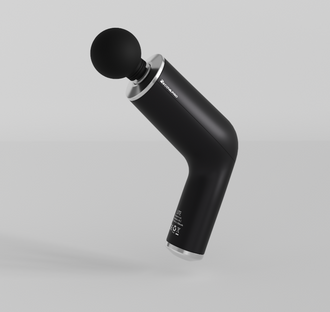
Recovapro Lite Massage Gun with Charging Mat
Percussion for your everyday routine.
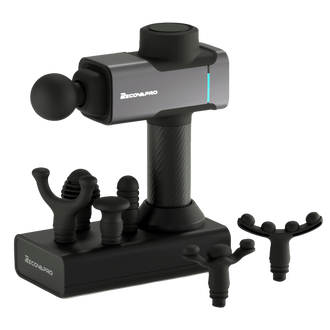
Recovapro Max with docking station
The flagship massage gun.